This week spread across a lot of ground: the inventory and equipment screen, a new wildlife layer, the vehicle architecture, a reactive crosshair, and survival and health, with smaller changes to the sky setup and player gear. None of this is in the public build, it is all work in development.
Inventory and equipment
The inventory screen got a long polish pass and a real feedback layer.
- Square slots that wrap - pockets, backpack, apparel, and weapons lay out as square slots that wrap to fit the panel instead of stretching or overflowing.
- Drag and drop between containers - moving an item from one container to another is a single atomic transfer with a capacity check, so a drop that would not fit is refused instead of half-applied.
- Live weight gauge - the carry gauge reads your actual equipped and stored weight rather than a placeholder.
- Feedback for every action - a banner, a cursor cue, and a sound fire on any accepted or refused inventory action, so a rejected drop tells you why.
- One weapon active at a time - equipping a weapon moves the previous one to a pocket, the backpack, or the ground, instead of stacking active weapons.
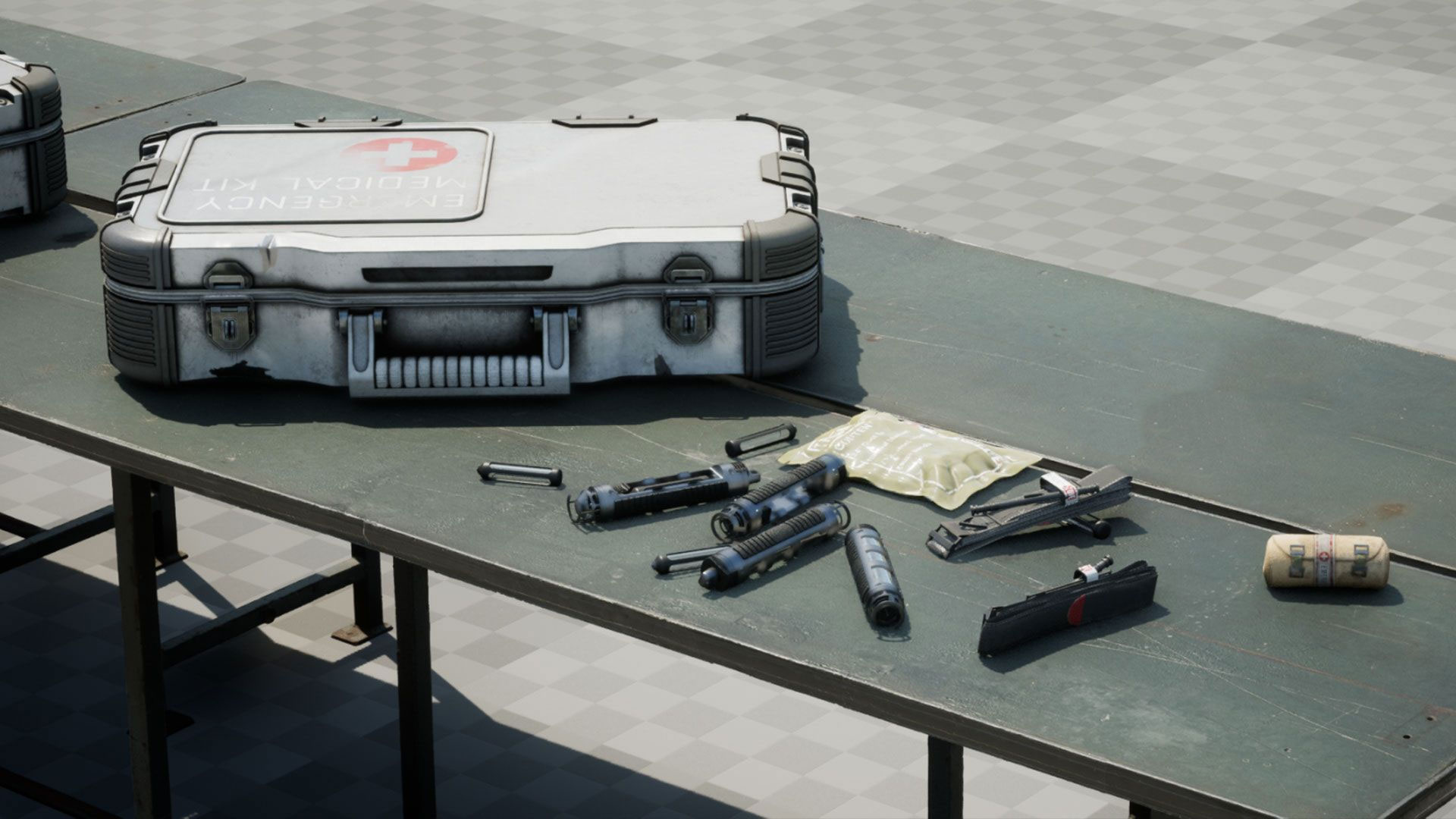
- Use items across containers - an item can be found, used, and consumed across pockets, backpack, and equipped slots, so you can use a bandage straight out of the backpack without shuffling it into a hand first.
Wildlife
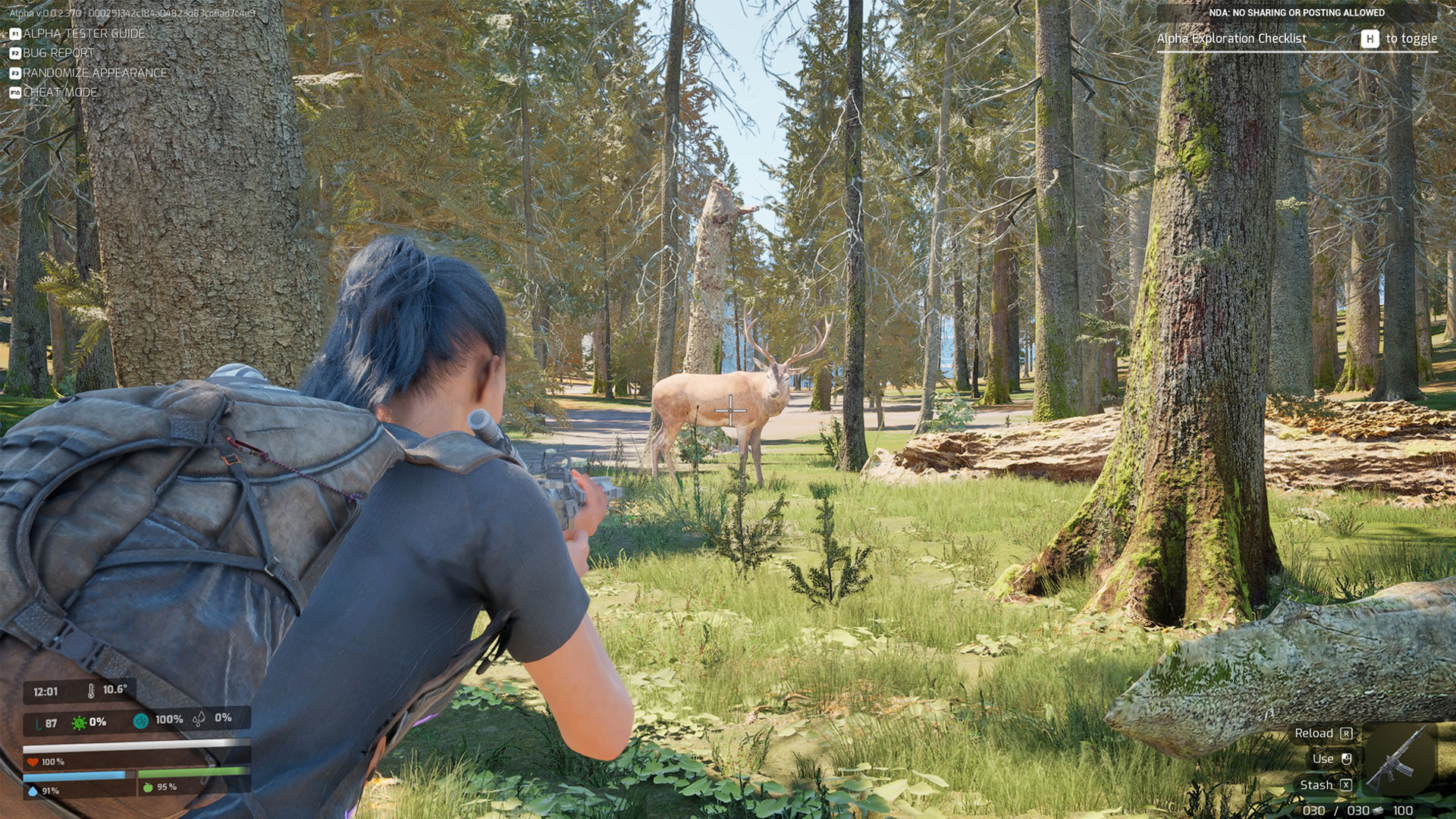
A living-animal layer for the world. Animals exist as lightweight agents simulated across the whole map at low cost, and they turn into full creatures when a player gets close, then fold back into agents once everyone leaves the area.
- First species - mule deer (prey), black bear (apex predator), and bald eagle (avian), each with its own behaviour archetype.
- Senses - every animal perceives by sight, hearing, and scent, and scent is carried on the wind, so staying downwind makes you much harder to smell.
- Prey and predators behave differently - deer herd and flee, an apex predator keeps a per-player threat table and escalates, so a bear gives a warning charge before it commits.
- Carcasses are part of an ecology - a kill decays through stages from fresh down to bones, and while it does it pulls scavengers toward it.
- Tracks on the ground - footprints and blood leave tracking marks that last longer on soft ground (firm rock holds them briefly, snow holds them longest). These are cosmetic and local to your machine.
What exists is the systems side. The meshes, animation, audio, and the per-species AI behaviour are content that is authored separately.
Vehicles
Most of the vehicle work this week was the foundation: a single architecture meant to carry every kind of vehicle Rooted will have, not just one type. A vehicle is described entirely in data, so its medium, its parts and their hit points, how it moves, and how it tunes all live in a data asset instead of in code.
- One core for every type - the same core drives vehicles across mediums (land, water, air, and underwater), whether they are driven by a player in a seat or piloted remotely. New types slot onto the shared core instead of each being its own special case.
- Built from capabilities - a vehicle is assembled from composable parts you bolt on. Storage is the first concrete one (a boat hold, a cargo tray, a saddlebag pair), using the same weight and volume rules as your pockets. Others, like lights and sensors, attach the same way.
- Type-aware damage - each vehicle ships its own damage profile, so an EMP hit fries electronics and power, fire favours the fuel tank, and ballistic rounds hammer the hull. A different vehicle reacts in its own way to the same hit.
- Aquatic movement - the first movement style reads water height, surface, and flow so a hull sits and moves on the surface.
- World-placed vehicles persist - a parked vehicle keeps its position, its damage, and its power across save and reload, even when the level around it streams back in at a different beat.
- Modding-ready by design - because a vehicle and its capabilities are data, a new vehicle, or a new behaviour bolted onto one, can be authored without touching code. The architecture was built from the start to be opened up to mods.
The first concrete vehicle is a motorboat, authored and driving end to end against the data and save path. It uses a placeholder mesh with no audio and test tuning. The mesh, sound, and balance, like the other vehicle types, are content that sits on top of the foundation.
Survival and health
Several survival vectors landed, all on a shared condition pipeline.
- Landing recovery - jumping off a roof and sprinting away no longer flies. A fall past a threshold staggers you, with a stepped recovery that ramps your speed back up and a harder fall costing more. Holding sprint just means you accelerate back to full pace as the stagger clears, with no re-press.
- Food and drink can make you ill - what you eat and drink can now inflict sickness or poisoning, driven by data on each item. Polluted water can bring on dysentery or mild poisoning, a death cap mushroom is heavily toxic, rat poison is severe, and allergens are tracked too.
- More ways to get hurt - wildlife hits can inflict bleeding, contagion zones tick afflictions over time, long-term poor hygiene can bring on dysentery, and a fracture slows your walk.
- Balance lives in data - wound damage-over-time, disease immunity windows, and debuff strengths moved into editable data assets, tunable without code and open to modding.
- Survival HUD - a bottom-left status cluster plus a toggleable notebook overlay read your current conditions. This is the first, minimal tier of the diegetic HUD plan.
- Multiplayer correctness - clients now properly see wounds, afflictions, and conditions, and the damage feedback (impact flash, heavy hit, slow-motion) now fires on dedicated servers and remote clients, not only on a listen-server host.
- Saves carry you over - per-player inventory, equipment, skills, and health now capture and restore across save and reload.
A crosshair that reads the situation
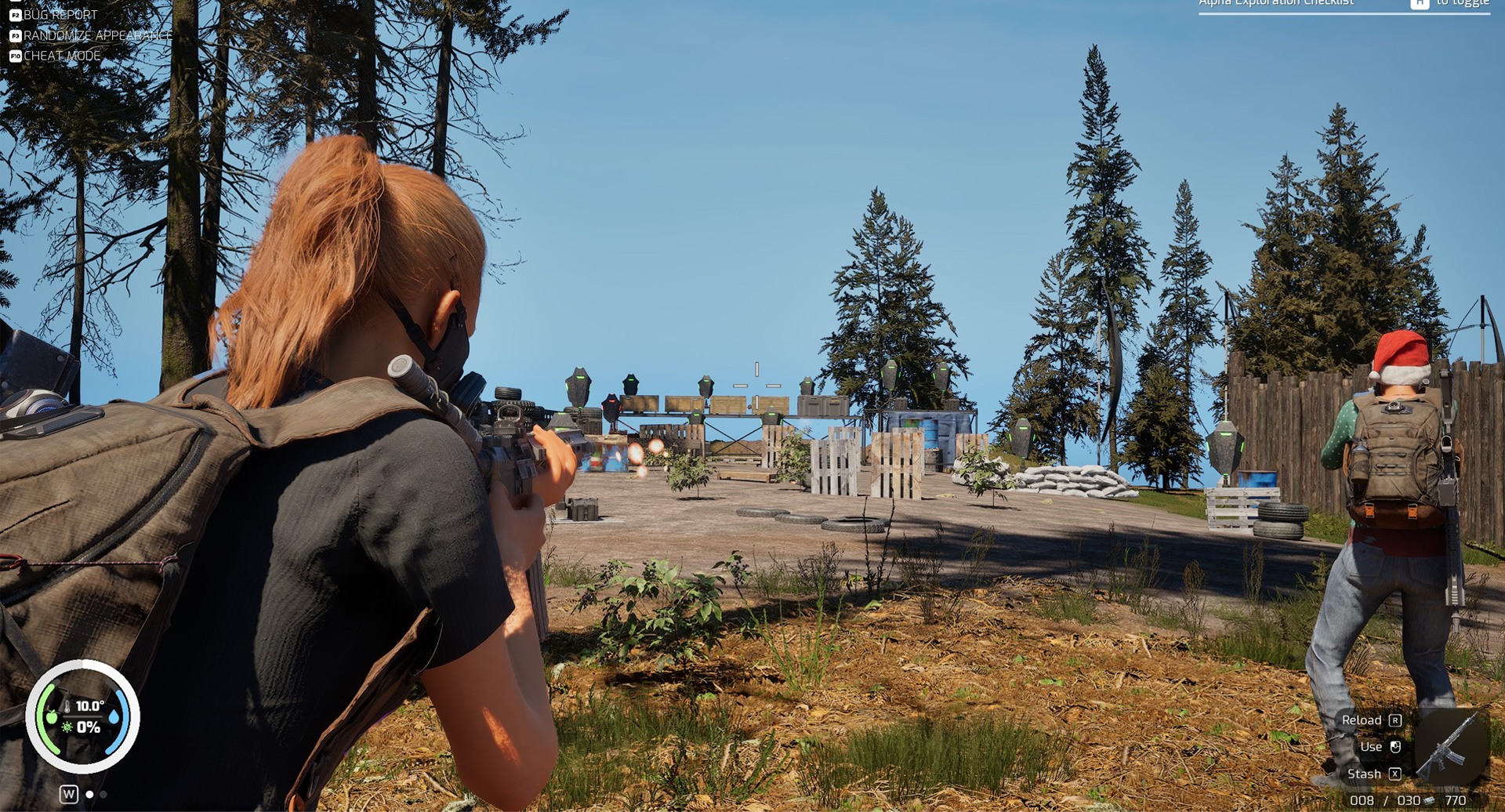
The crosshair is not a fixed dot drawn over the screen. It is a system that reacts to your weapon, your aim, and what you are doing, and it is the single place the game draws something useful in the centre of the screen.
- Per-weapon reticles - each weapon carries its own crosshair style, so a pistol, an SMG, a rifle, and a melee weapon each read differently, and swapping between them morphs from one shape to the next instead of popping.
- It blooms when you do - the reticle opens up with recoil, movement, and hip fire to show your real spread, settles back as you steady, and tightens when you aim down sights.
- Ammo and reload around the reticle - magazine rounds show as pips laid out to suit the weapon (an arc, a line, or shotgun chunks), a reload runs a progress arc, the fire mode shows as a glyph (single, burst, auto, bolt), and a bolt-action tells you when it needs a re-chamber.
- Hit feedback - landing a hit flashes the crosshair, with a different read for a body hit, a headshot, and a kill.
- It changes with context - in build mode it becomes a snap pointer that tints to show whether a placement is valid, and it carries further variants for interacting with the world, piloting, and driving, while bare hands hide it.
- Your condition shows through - wounds, afflictions, and low health subtly modulate it with a wobble, a loss of colour, or a breathing bob, so how you are doing reads without opening a menu.
Every change springs smoothly between states instead of snapping, and the reticle is drawn so its curves stay crisp at any resolution. The shapes are defined in data per weapon rather than as fixed art. What exists is the system and how it behaves, the per-weapon style pass is its own work on top.
Also this week
- Sky and weather groundwork - the scaffold that day-night and weather will sit on.
- Per-body-type backpacks - the backpack supports a mesh per body type, authored in data with a fallback.
- Editor preview for deployables - placeables like workbenches now show their mesh in the editor instead of staying blank until play.
That is the week from the development side.
Mat